
English
English at Tillington Manor Primary School
At TMPS, we believe English is a fundamental life skill which helps to prepare children for the future. Through our English lessons, we help children to develop the skills and knowledge which will enable them to communicate effectively and creatively with the world at large, through spoken and written language. We assist children in enjoying the literature and rich variety through our English approaches of Talk for Writing in Early Years and KS1 and Linked English in KS2. The English Lead is Miss Hall.
Our Aim
- Have the confidence to produce high quality writing, using precise grammar and punctuation through their application of knowledge and skills.
- Have the ability to use their powers of imagination to write creatively through enjoyment and enthusiasm.
- Show an awareness of the audience and the need to write for a purpose.
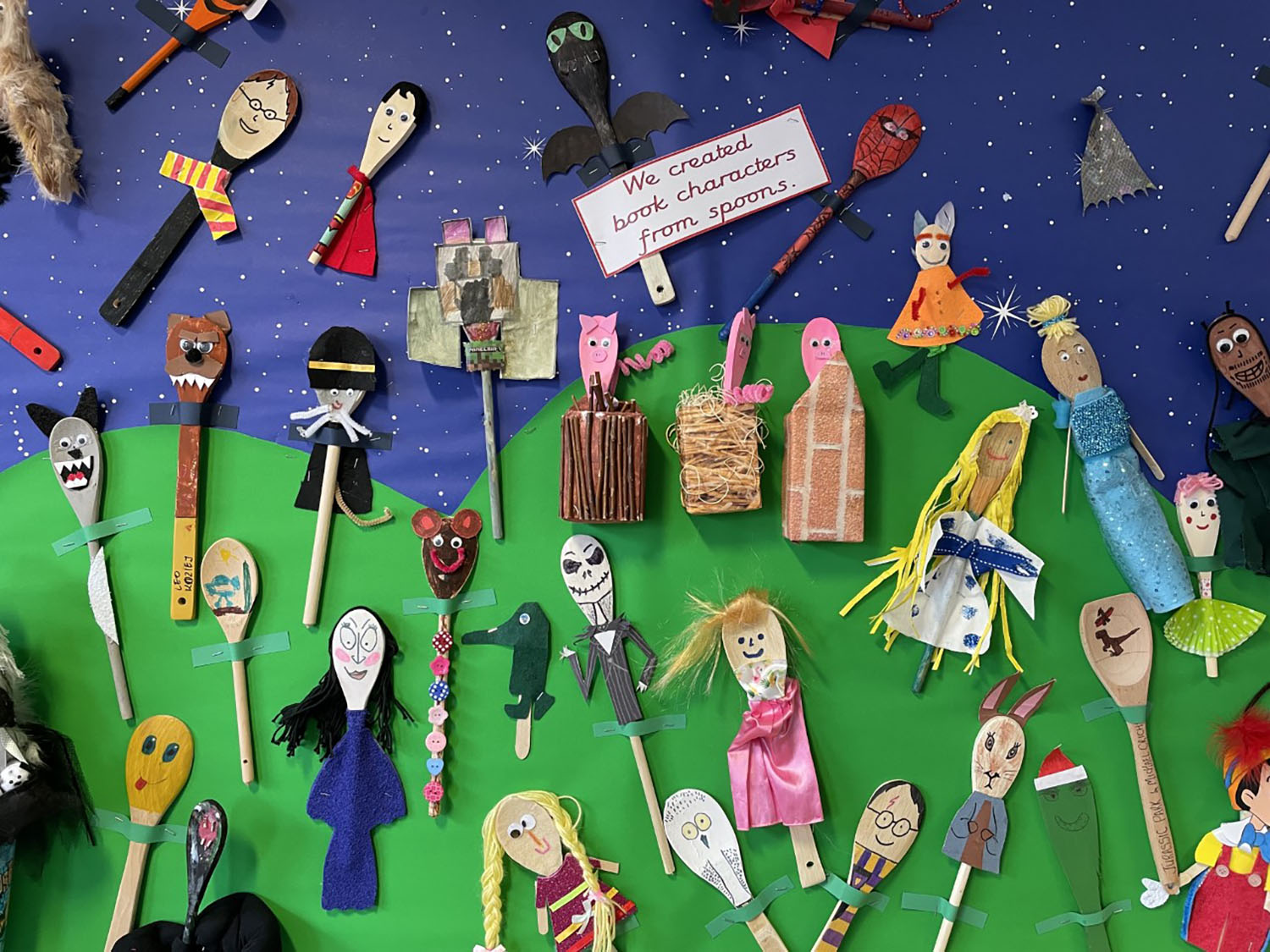
- Have a love for reading and a broad knowledge of books they can chose to read for enjoyment.
- Be reading by age 6 where they can apply their knowledge of letter and sound correspondence.
- The ability to read fluently with good understanding and stamina.
- An interest in words and their meaning to acquire wider vocabulary.
- Experience a range of text types and genres, across different contexts to develop their understanding.
- Have good listening skills.
- Use legible handwriting following the Kinetic Letters programme.
- Develop knowledge and understanding of the vast English language and the spelling patterns.
-
Our English curriculum is split into 4 main areas:
- Reading and Phonics
- Writing, including grammar and punctuation
- Spelling
- Spoken language
We teach these core skills through our English and Reading lessons as well as additional spelling and handwriting sessions. However, our ethos for English is promoted throughout the curriculum.
Writing at Tillington Manor Primary School
In EYFS and KS1 we follow the Talk for Writing programme. This follows the structure of:
- Cold task
- Creative Hook
- Model Text introduced with a story/text map to support the learning
- Vocabulary focus
- Oral retelling and immersion of the text
- Comprehension
- Identifying the underlying structure of the text
- Sentence level skills work
- Innovation
- Independent application
- Publishing and celebrating
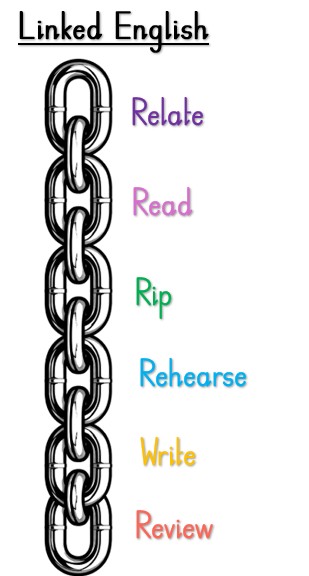
From Y3 to Y6 we use ‘Linked English’ as a framework for teaching writing. This follows the 6Rs.
1) Relate
2) Read
3) Rip
4) Rehearse
5) Write
6) Review
The PAFI (purpose, audience, form and intention) are shared with the children throughout the writing unit.
Handwriting at Tillington Manor Primary School
Handwriting is a physical activity that involves movement and recognition skills that need to be learnt and become part of the automatic cognitive skill set of the pupil. To achieve this, Stanley Road has chosen the Kinetic Letters handwriting programme.
Handwriting is of fundamental importance to educating our pupils because pupils who do not learn to read and write fluently and confidently are, in every sense, disenfranchised. The mastery of automaticity in handwriting is therefore one of the key priorities of the School.
The key principles of the programme are:
- Building physical strength underpins handwriting and concentration. This knowledge informs the working positions that children use for writing and the strengthening targets they work on.
- Pupils are not expected to do anything before they are developmentally ready for it.
- The different components of writing are mastered individually before being used in combination.
- Letters are learnt as movements, not as visual shapes, and movement remains central to developing automaticity in letter formation, flow and fluency.
- Posture is important in developing the correct position for handwriting and so children are taught how to organise their working position and paper position to enable comfortable and fluent writing from the start.
- Correct pencil hold is taught from the start (ie as soon as a tri-pod grip is developmentally appropriate).
- Reading and writing are reciprocal processes; strengthening handwriting skills will support reading and writing development.

Reading at Tillington Manor Primary School
At Tillington Manor, we are committed to ensuring that all children learn to read so we begin this journey at the earliest stage when they join our school. We want our children to develop a love of reading that will last a lifetime.
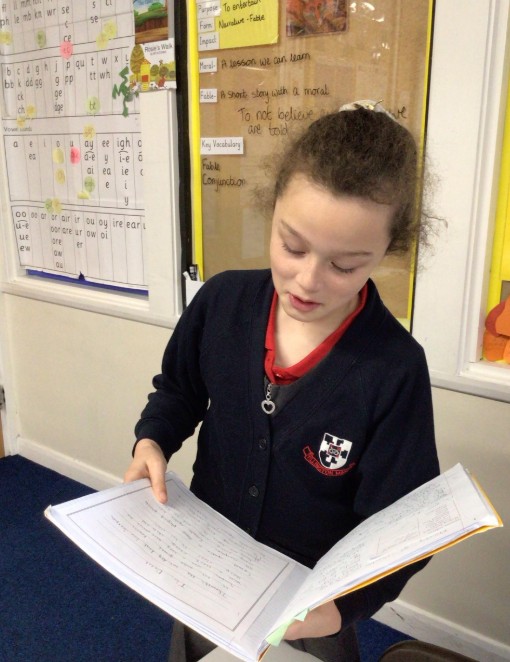
We teach children to read using the Read Write Inc. Phonics programme, which supports children to develop their ability to decode and, as they become more confident readers, to develop their reading comprehension skills, which are then developed across school. It enables every child to become a confident and fluent reader by focusing on sounds and words at a child’s own level, regardless of their age.
Once children complete the Read Write Inc. Phonics programme, they move onto whole class reading sessions. For this, we follow a scheme called ‘Ready Steady Comprehension’. These sessions are built around high-quality texts and encourage book talk, as well as developing comprehension. The structure of these lessons follows a ‘Model, Read, Practise, Apply’ sequence. Children are exposed to fiction, non-fiction and poetry across reading journeys to give them a wide reading base and broaden their literary experiences.
Reading at TMPS has high priority in the curriculum. A strong emphasis lies in early reading with a focus on RWI sessions starting in Nursery and exploring stories and rhymes. There are varied opportunities for reading skills to be taught and practiced within English lesson and across the curriculum:
- The teaching of RWI
- Sight vocab and red words.
- 1:1 reading with an adult.
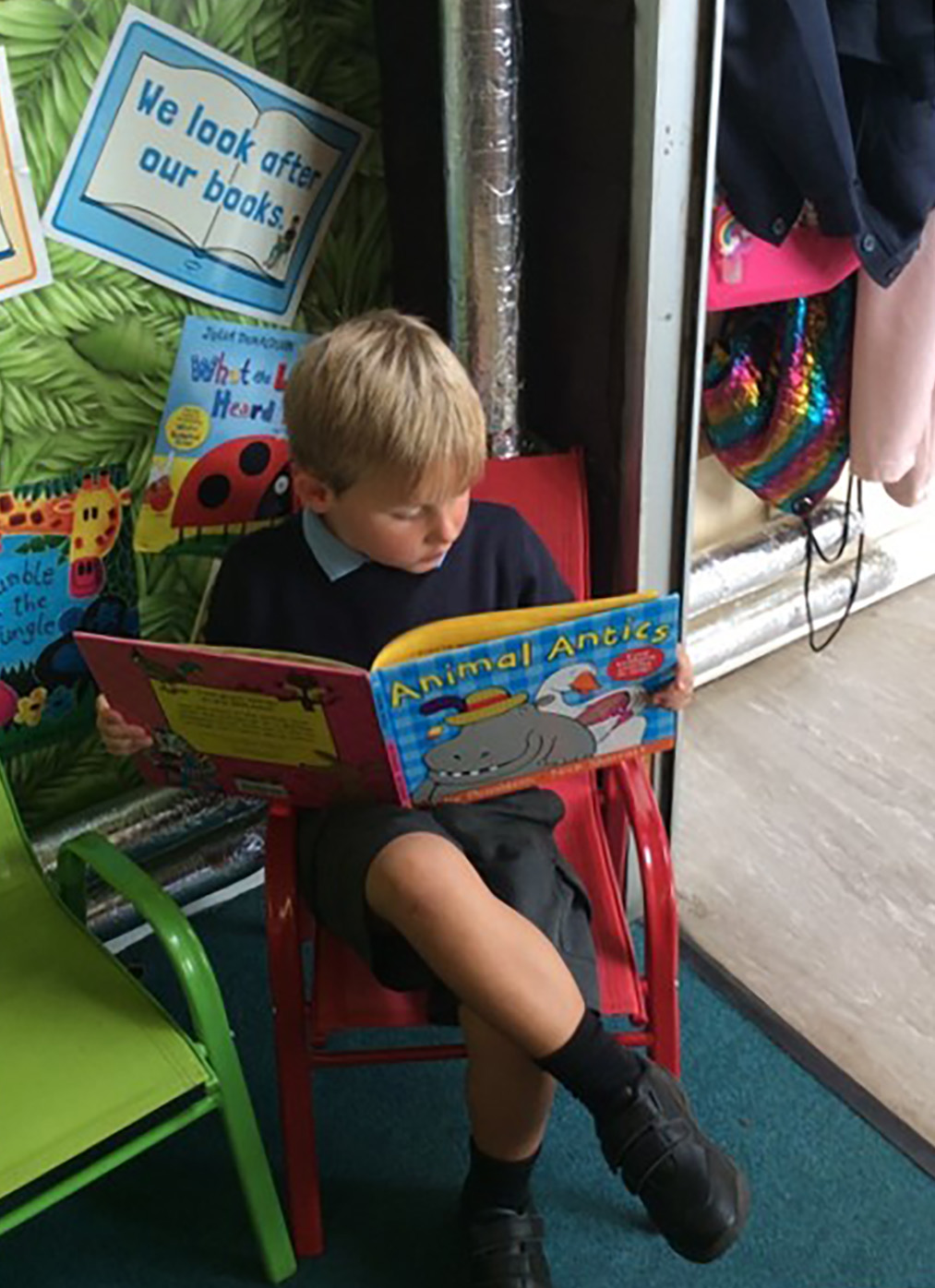
- Use of the Reading Den for reading for pleasure.
- High quality texts accessed on daily basis in whole class reading sessions.
- Daily story time.
- Key stage 1 phonically decodable home-readers linked to their RWI level.
- Key stage 2 Accelerated Reader banded book with a follow up quiz.
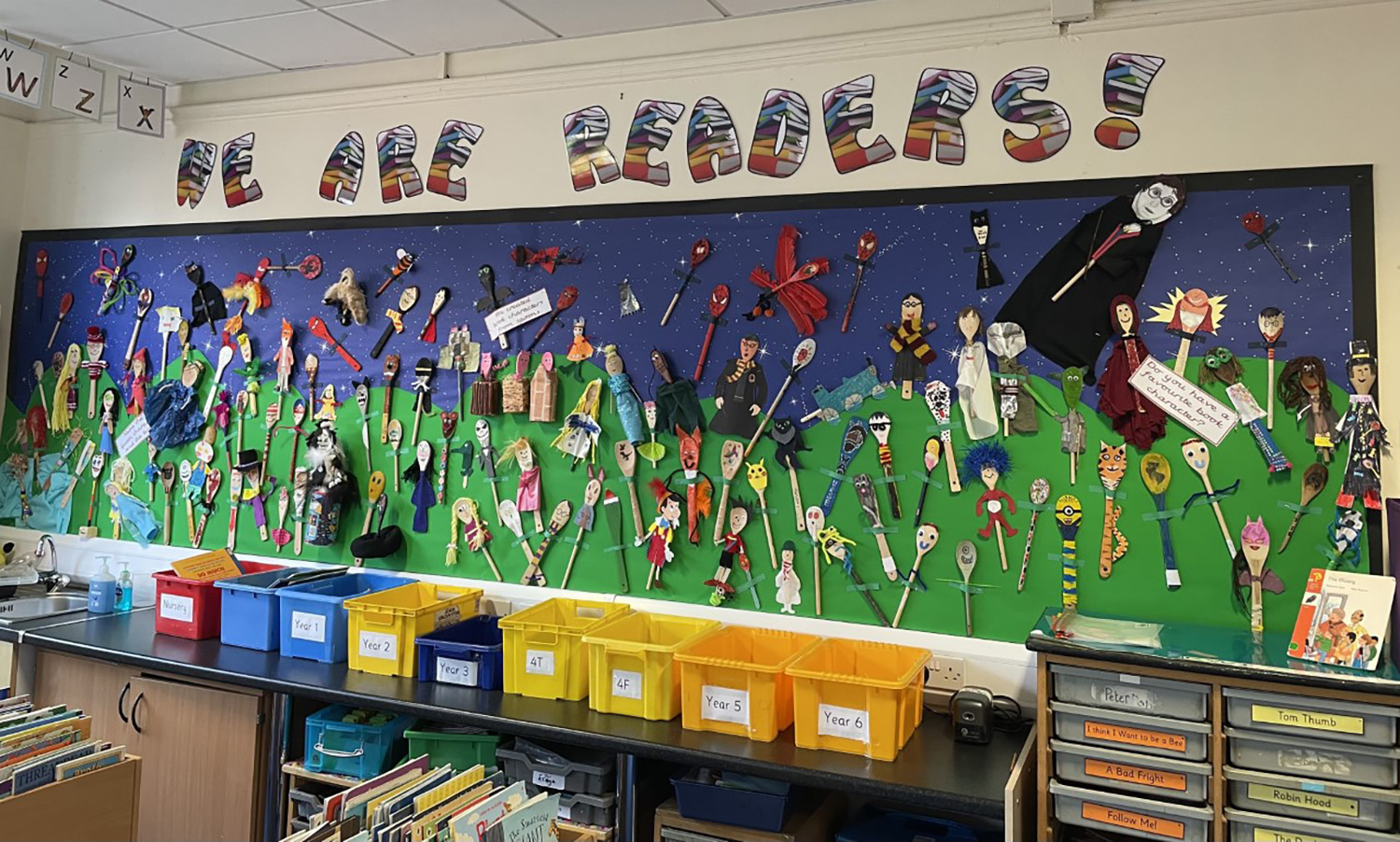
Each week, every class visits our school ‘Reading Den’. During this visit, the children choose a book they would like to read for pleasure. This book is to share at home with their grown-ups. We believe this not only helps to develop their inferential skills but also supports a life-long love of reading. We expect children to read 3 times a week.
As a school, we recognise the value of reading aloud to children to model appropriate use of story language and reading with expression. We want to enthuse them with a love of books and inspire them as writers. Children have the opportunity to participate in exciting reading activities such as World Book Day.
Accelerated Reader
Accelerated Reader is part of Renaissance Reading software package which has been adopted by the school to encourage and improve reading, measure growth of the individual reader and to provide quality reading for all. It allows for personalised reading targets to be set up for progress and to be easily monitored. Children from Y2, or after they have completed the RWI programme, choose a book at their level and read it at their own pace. When they have finished, they will take a short quiz, in school.
The STAR reading assessment gives children a ZPD (Zone of Proximal Development) range. The children will refer to this at their ‘zone’. A ZPD can and should change as children progress through the year.